Why Voice Search Matters For Your Dental Practice

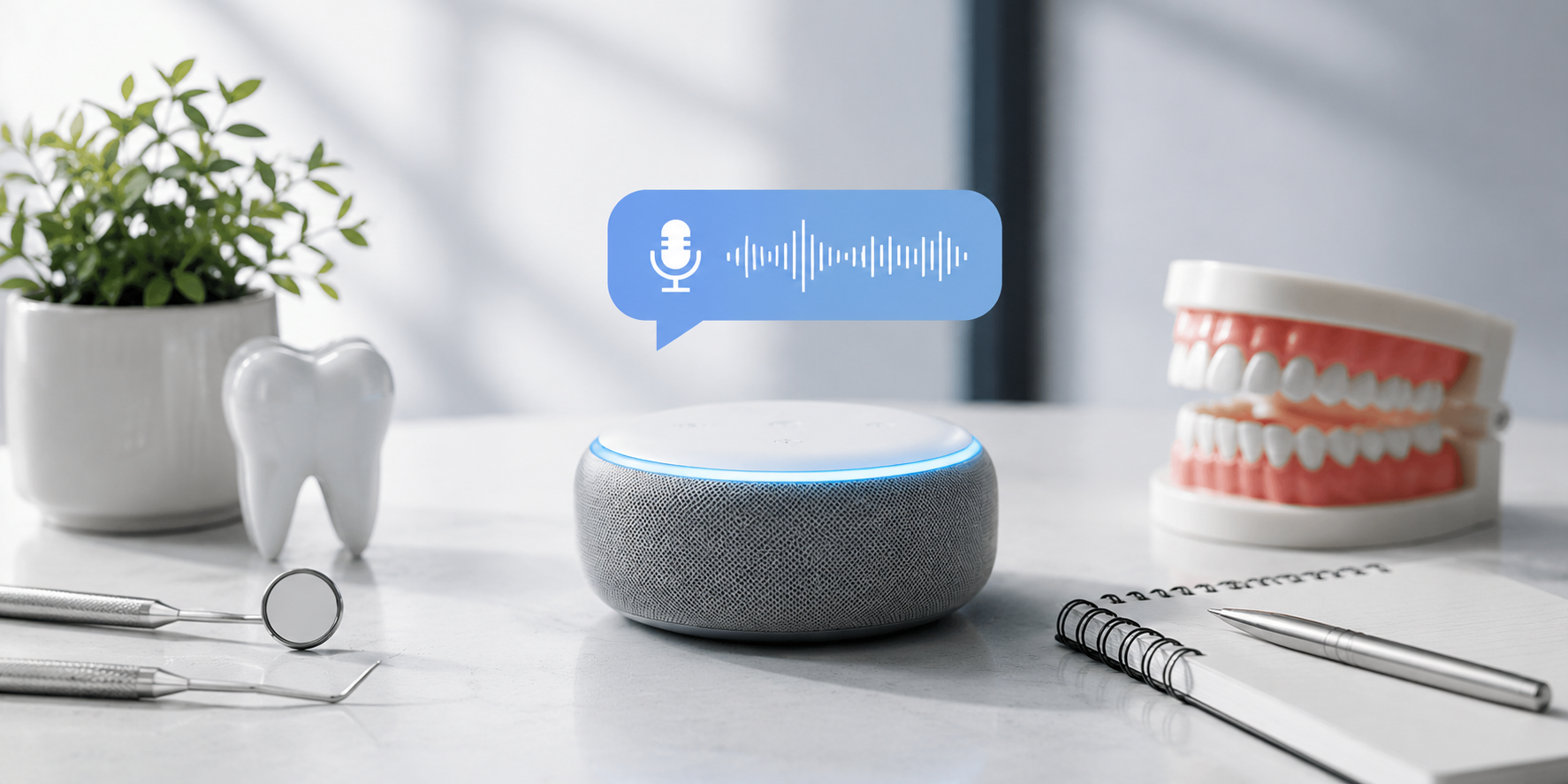
Think about the last time you needed to find something quickly. Did you type it into Google, or did you just ask your phone out loud? A growing number of patients are doing the second one. They talk to Siri, Alexa, Google Assistant, and AI chatbots the same way they would talk to a friend. Dental practices that are not set up to answer those spoken questions are quietly missing out on new patients.
This shift is called voice search, and it is changing what good SEO looks like. Here is what it means for your practice, and how to start creating content that answers the real questions patients are asking, in the way they actually ask them.
What Is Voice Search?
Voice search is exactly what it sounds like. Instead of typing “dental implants cost,” someone simply says, “How much do implants cost near me?” Their phone or assistant then tries to find and read back the best answer.
The key difference is how people phrase things. When we type, we use short, clipped phrases. When we speak, we use full, natural sentences, almost like we are asking a real person. Stuffing a webpage with short keywords like “dental implants cost” no longer works as well. Search engines now favour content that answers whole questions in a natural way.
Why This Matters for Dental Practices
Dental searches are a perfect match for voice search because so many patient questions are personal, practical, and easy to say out loud:
- Does my dentist take my insurance?
- How much do implants cost near me?
- Is there an emergency dentist open now?
- What is the best way to whiten my teeth?
- Do I need a filling if my tooth does not hurt?
These are full, natural questions, and that is exactly the kind of content voice assistants and AI search tools want to serve up as an answer.
There is a strong local angle too. A huge number of voice searches include “near me,” because people want something close by and available soon. If your website does not clearly answer these local, practical questions, an assistant will happily recommend a competitor instead.
Patients Are Searching Beyond Google Too
Patients are no longer relying purely on Google. Many now ask ChatGPT, Gemini, Copilot, and Claude the same kinds of questions they would ask out loud. Your content needs to work just as hard for these AI searches as it does for a traditional search engine or voice assistant.
Patients want quick, clear, trustworthy answers, without clicking through pages of a website to find them.
How to Create Content That Wins Voice Search
You do not need anything technical to get started. Just think like your patients and write like a helpful person, not a marketer.
1. Build an FAQ Page Around Real Patient Questions
Create a dedicated FAQ page, or add one to your key service pages. Fill it with the actual questions patients ask at reception and on the phone, such as:
- Will a filling hurt?
- What should I do if I chip a tooth?
- How often should I really get a check up?
- Can children see the same dentist as adults?
- Do you offer sedation for nervous patients?
Write the question exactly as a patient would say it, then answer it in plain, friendly language straight away. A short, direct answer beats a long paragraph every time.
2. Use Natural Language, Not Just Keywords
Rather than “Dental Implants Cost,” try “How much do dental implants cost?” and answer it directly, the way you would explain it to a patient in your chair.
3. Answer the Question Immediately
Voice assistants usually read out one short answer. If your website takes three paragraphs to get to the point, it will rarely be chosen. Answer the core question in the first sentence or two, then add detail below for anyone who wants more.
4. Keep Your Google Business Profile Accurate
Many “near me” searches pull information straight from your Google Business Profile, not your website. Keep your hours, address, phone number, accepted insurance, and services complete and up to date. It is one of the easiest wins available.
5. Think Local and Practical
Create content specific to your area, such as a post answering “What is the best emergency dentist near me?” with your practice as the clear answer, including your hours and how quickly you can see someone.
6. Write for People, Not Search Engines
Most patients are not searching using dental jargon. They ask simple, everyday questions. Write in plain English, the way you would speak to a nervous patient, and you will naturally match how people search out loud.
A Few Quick Examples
- “How do I stop my gums from bleeding?” Answer with clear, simple advice and when to book an appointment.
- “Is teeth whitening safe?” Answer honestly, covering safety, results, and who it suits.
- “What is the difference between a dentist and a hygienist?” Answer in plain terms, without jargon.
- “How do I find a good dentist near me?” Answer with what makes your practice stand out locally
Each of these becomes a short blog post, an FAQ entry, or an addition to a dedicated page.
The Bottom Line
Voice search is already how many patients find dental practices. The practices that benefit most will stop thinking in keywords and start thinking in real questions, the kind patients genuinely ask out loud.
Build simple, honest, conversational content around the questions your patients actually have, from insurance and cost to opening hours and emergency care. You will not just improve your SEO. You will make it easier for anxious or time pressed patients to get the reassurance they need, right when they ask for it.
Ready to make sure your website answers the questions patients are actually asking? Give our team a call on 01202 677277.
More posts from our team
Five Star
Reviewed Marketing



 "Would definitely recommend to a friend"
"I cannot recommend Dental Design highly enough"
"Really great company to deal with"
"Very professional, efficient & adaptive to new situations"
"I cannot recommend them highly enough"
"Has been invaluable and gone out of her way to help us"
"We love the look of our practice website. Very professional!"
"Dental Design stood out both in their knowledge of the industry and their professionalism"
"The team and package offered at dental design was unrivalled"
"absolutely fantastic and are always on hand to help"
"Dental Design are fantastic to work with"
"always met with a swift and professional response"
"Would definitely recommend to a friend"
"I cannot recommend Dental Design highly enough"
"Really great company to deal with"
"Very professional, efficient & adaptive to new situations"
"I cannot recommend them highly enough"
"Has been invaluable and gone out of her way to help us"
"We love the look of our practice website. Very professional!"
"Dental Design stood out both in their knowledge of the industry and their professionalism"
"The team and package offered at dental design was unrivalled"
"absolutely fantastic and are always on hand to help"
"Dental Design are fantastic to work with"
"always met with a swift and professional response"

